Nice Guy Syndrome…
It’s one of the oldest lies in dating:
“I just want a nice guy.”
Ask most women what they’re looking for and you’ll hear the same list—kind, respectful, emotionally available, a good listener. Sounds great. Reasonable, even.
But then look at who they actually date.
It’s not the overly patient guy who never rocks the boat and is there hand and knee ready to serve. It’s the confident, emotionally controlled man who doesn’t chase, doesn’t explain himself, and doesn’t center his life around her approval. Sometimes that guy is rough around the edges. Sometimes he’s selfish. Sometimes he disappears for a week and still gets another chance.
So what’s really going on here?
Are women lying?
Or are men listening to words instead of watching behavior?
The Myth of the Nice Guy
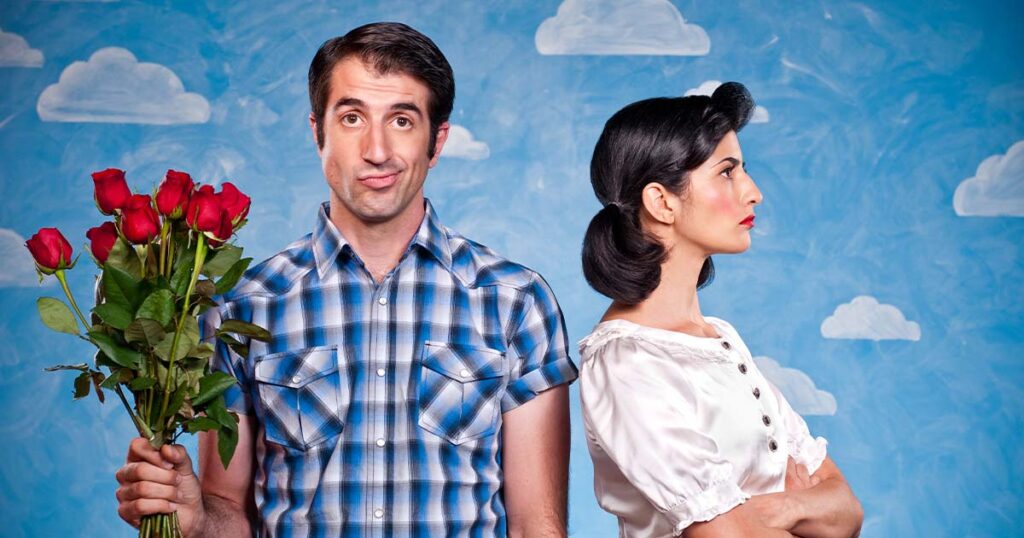
A “nice guy” isn’t just polite. He’s safe to the point of being dull.
He avoids tension. He over-agrees. He asks instead of leads. He apologizes too much. He’s emotionally available because he doesn’t have much else demanding his time.
He thinks consistency and reassurance create attraction.
They don’t.
Women don’t get turned on by comfort alone. Comfort comes after attraction. Before that, attraction comes from confidence, direction, and a little unpredictability. From a man who doesn’t need permission to take up space.
Niceness without backbone reads as weakness. Predictability. Low stakes.
What the Data Actually Shows
This isn’t opinion. It shows up everywhere.
- A 2023 study published in Psychological Science found women are more likely to be sexually aroused by men who create emotional tension—teasing, confident, slightly mysterious—than men who constantly validate them.
- On Tinder, women swipe right only 4.5% of the time. The top 10% of men get over 60% of the matches.
- In speed dating studies, men who were rated as assertive, dominant, and humorous were picked at 2–3x the rate of those who were rated as “kind” or “reliable.”
- Data from Hinge shows that women respond 16% more to profiles that include leadership-oriented language like “I run,” “I lead,” or “I build,” versus nurturing terms like “I care” or “I support.”
Studies consistently find that women respond more strongly to men who create emotional tension—playful challenge, teasing, confidence—than men who constantly validate and reassure.
She may say she wants the sweet guy.
But the man who makes her laugh because he teases, keeps her guessing, and doesn’t beg for approval is the one who gets the call back.
Hypergamy, Instincts, and Why Availability Kills Attraction

Women date up. Always have. That isn’t a moral judgment—it’s biology and incentives.
The “nice guy” signals low value because he’s too available. His attention is cheap. He gives it away immediately. He centers her before she’s earned anything.
The man who’s selective with his time? Who doesn’t pedestalize? Who doesn’t need her to validate him?
That’s scarcity. That’s status. That’s desire.
How This Destroys Men Who Don’t Get It
Most men were taught the same lie:
Be patient. Be kind. Be available. Eventually she’ll see your worth.
What actually happens is worse.
He becomes the emotional dumping ground. The safe place. The backup option. The guy she leans on while pursuing men she’s actually attracted to.
Then comes the line every “nice guy” knows by heart:
“You’re such a great guy. I just don’t want to ruin the friendship.”
Translation:
You were never a romantic option.
And you put yourself there.
Where the Bad Advice Comes From

Here’s another reason so many young men stay confused: they’re getting bad advice from people who don’t live in reality.
The mainstream feminist message says: “Be passive. Be soft. Be safe.”
The Christian conservative message says: “Be nice. Be patient. Marry early. Provide.”
Both are delusional.
A lot of men stay stuck because they’re getting advice that doesn’t match reality.
That ideal used to align with the culture. It doesn’t anymore.
You want proof? Look at Steven Crowder — the perfect Christian, Conservative husband on paper… Did everything “right,” by the book. Married young, built a family, stood for faith and values—and what did it get him? A wife who secretly recorded him, set him up, took the money, and flipped the script like a good little Instagram-trained feminist while still cosplaying as a conservative Christian.
Marriage, family, and faith once came with shared expectations and consequences. Today, the incentives are different. The legal system is different. Social dynamics are different.
Ignoring that doesn’t make you virtuous. It makes you exposed.
This isn’t an argument against values. It’s an argument against blind faith in systems that no longer protect men who sacrifice without leverage.
Reality Check
- Most divorces are initiated by women — Roughly 70% of divorces are initiated by women. When college-educated, that jumps to 90%.
- A significant portion of marriages are functionally sexless — multiple studies say 1 in 4 marriages today are sexless (defined as 10 or fewer times per year).
- Marriage happens later and later –The average age of first marriage is now 30 for women—and rising.
- Custody and asset outcomes still overwhelmingly favor women in disputes — Men lose custody in over 80% of contested cases..
And yet, conservative influencers keep pretending we live in Mayberry. They push sermons and family values without acknowledging how marriage laws, culture, and power dynamics have shifted. They sell young men a dream about honor and duty—while ignoring the very system that punishes men for stepping into that dream.
We’re not saying don’t have values. We’re saying don’t be a sucker.
Tradwives are a niche fantasy. Most Western women today don’t respect traditional values because the culture doesn’t require them to. They have no reason to submit, stay loyal, or support a man who follows the old blueprint—because they’ve got the state, social media, and a million orbiters in their inbox ready to tell them they deserve more.
If you want to win in this era, stop looking for rules that no longer apply. Build strength. Build value. Build options.
Don’t marry a fantasy. Build a life so solid you don’t need one.
The Friendzone Is a Coffin
Let’s get something straight: the friendzone isn’t a phase. It’s a graveyard. And every so-called “nice guy” who leads with softness, approval, and zero backbone ends up buried in it.
Women don’t friendzone men they respect.
They friendzone men they don’t feel anything for.
You’re not “waiting your turn.” You’re not “proving you’re different.” You’re just the emotional punching bag she leans on between hookups. You get the crying phone calls. The trauma dumps. The “you’re such a good guy” compliments. Meanwhile, some other dude is blowing her back out—while you’re cash-apping her coffee money and proofreading her resume.
This is what happens when men are raised to be emotionally available but never taught to lead. You’re trained to be her therapist, her safety net, her support system. But you were never what she actually wanted.
What Actually Works
Kindness without strength is weakness. It’s obedience dressed up as virtue. You want to be effective with women? Be a man who could burn it all down—but chooses not to. A man who leads, who sets the frame, who doesn’t beg for access to a woman’s attention—he makes her earn his.
You don’t win by being agreeable. You win by being sharp, grounded, and unapologetically masculine. You speak with purpose. You draw lines. You walk away when they’re crossed. You’re not here to prove yourself. You’re here to build your world—and if she wants in, great. If not, you were already moving forward.
Here’s how you do it:
- Set boundaries early. If she flakes, you walk. If she disrespects you, you check it or leave.
- Lead. Make plans. Make decisions. Don’t ask her where she wants to eat—tell her what time to be ready.
- Flirt with confidence. Tease. Be playful. Stop filtering yourself. Attraction thrives on tension, not politeness.
- Stay mission-focused. Your life has to be bigger than getting a girlfriend. Women are a byproduct of a man with purpose—not the goal.
Once you start acting like this, everything changes. Not just in dating, but in how people treat you, how you carry yourself, and how much of your own time you stop wasting.
She says she wants a nice guy.
But what she really wants—is a man.